
The Ultimate Guide to Designing Your Round Diamond Engagement Ring: Settings, Metals, and More
Classic, chic, timeless – the allure of a round diamond engagement ring is undeniable. This super versatile shape is our most popular stone, and for very good reason. If you’re considering a round diamond engagement ring, read on to learn more about the settings, metals and styling tips that will help you create a beautifully unique piece to give its wearer pleasure for a lifetime.
Settings
First things first, settings. A round diamond is incredibly versatile, which means it’s well-suited for a range of settings, from classic solitaire to sleek bezel. Preference and aesthetic are the most important considerations here, making sure the finished ring is aligned with the wearer’s style, but there are still a few stylistic decisions to consider.
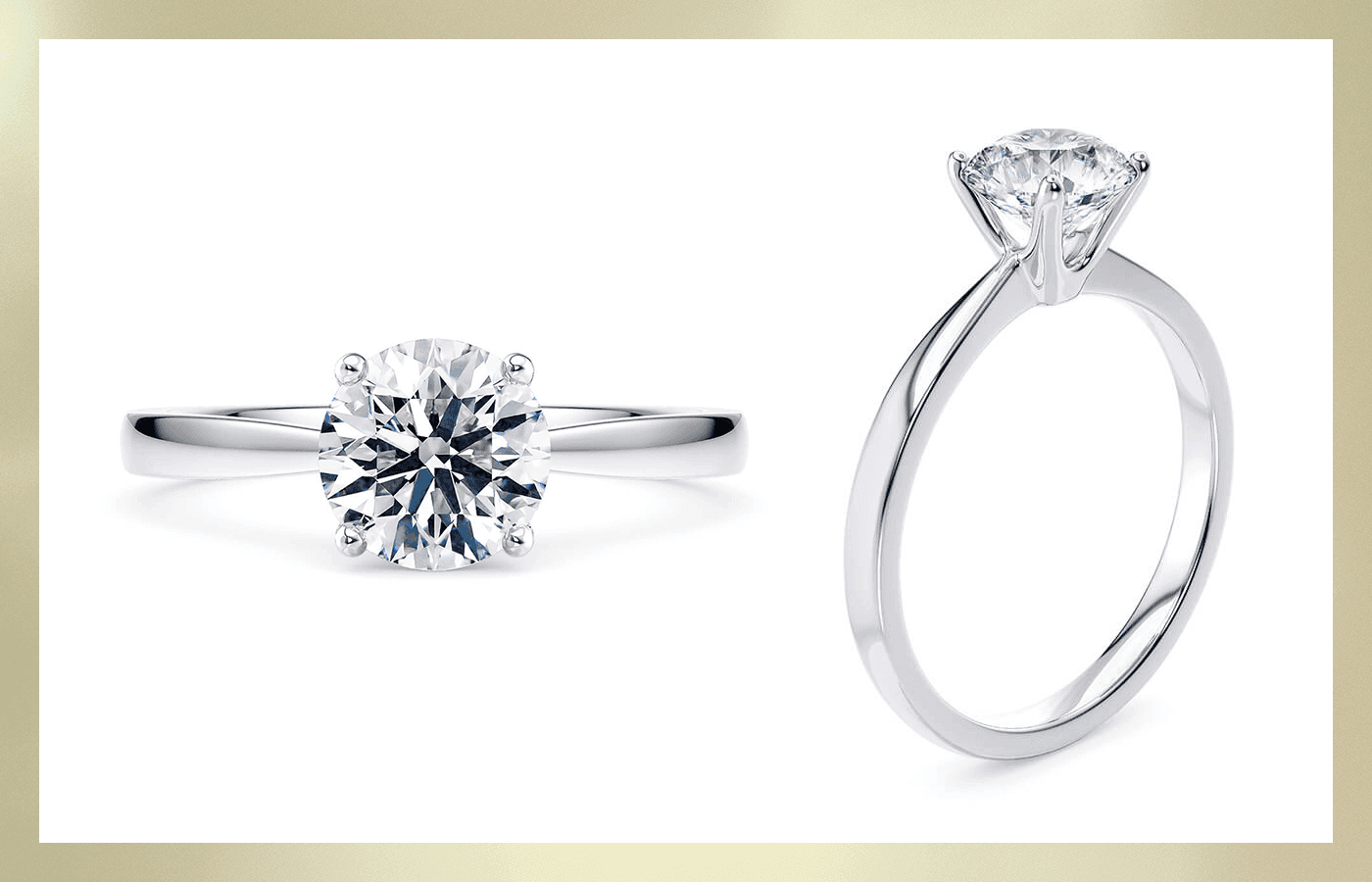
Solitaire setting: A classic choice, the solitaire setting will showcase your round diamond's brilliance and simplicity, letting the stone take centre stage. This high set, high pronged design gives any stone the wow-factor.
Halo setting: For a bit more sparkle, you might like to consider a halo setting. As the name suggests, a halo setting surrounds your round diamond with smaller stones for a dazzling effect. This could be an opportunity to introduce colour into your design by introducing a gemstone like emerald or sapphire. Alternatively, a diamond halo makes a timeless choice.
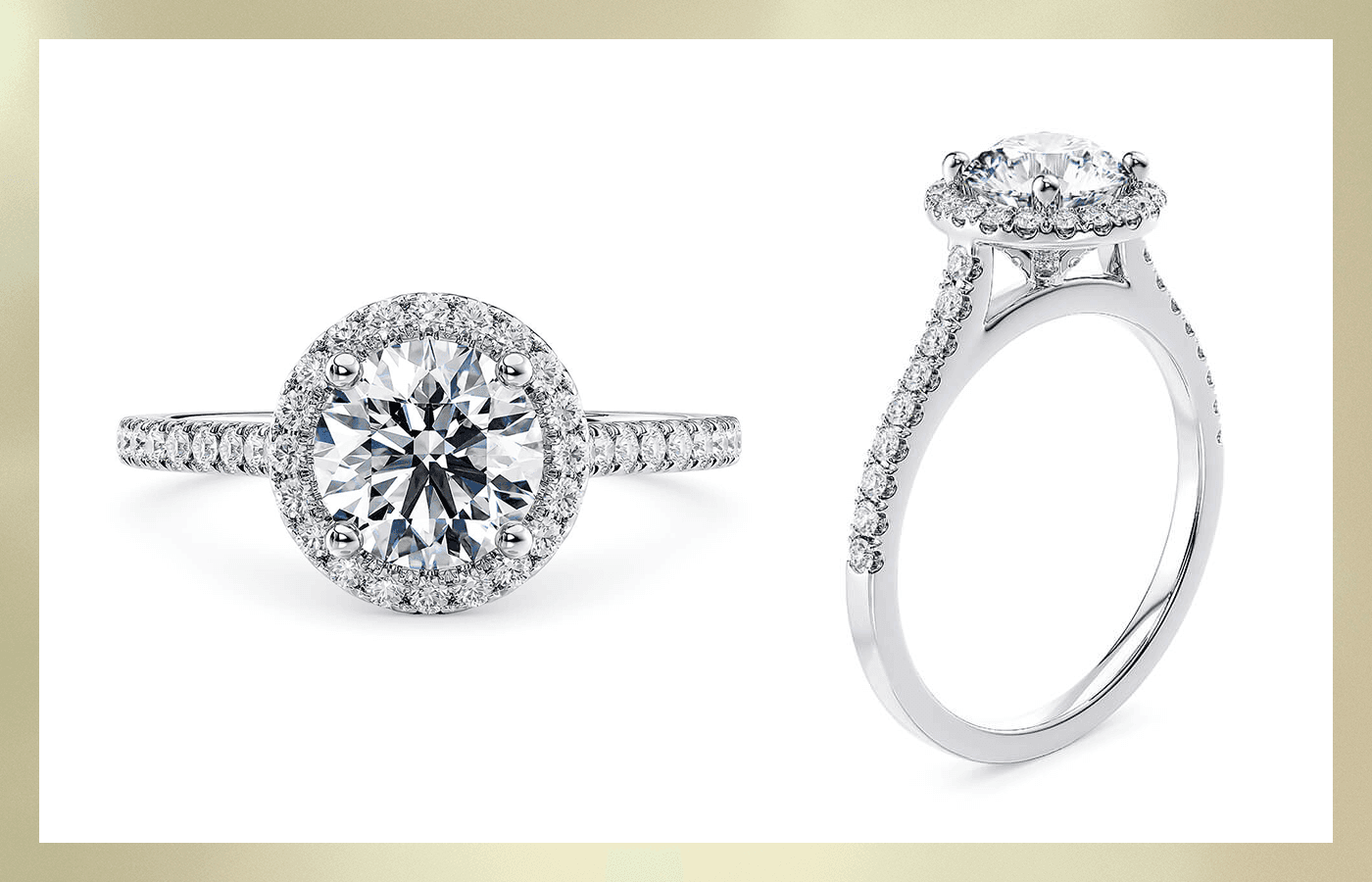
Bezel setting: Although a very old style of setting, the clear lines of a bezel offers a sleek, modern look, with a metal rim that completely encircles the diamond. The bezel setting’s continuous frame wraps around your stone for an extra-secure hold.
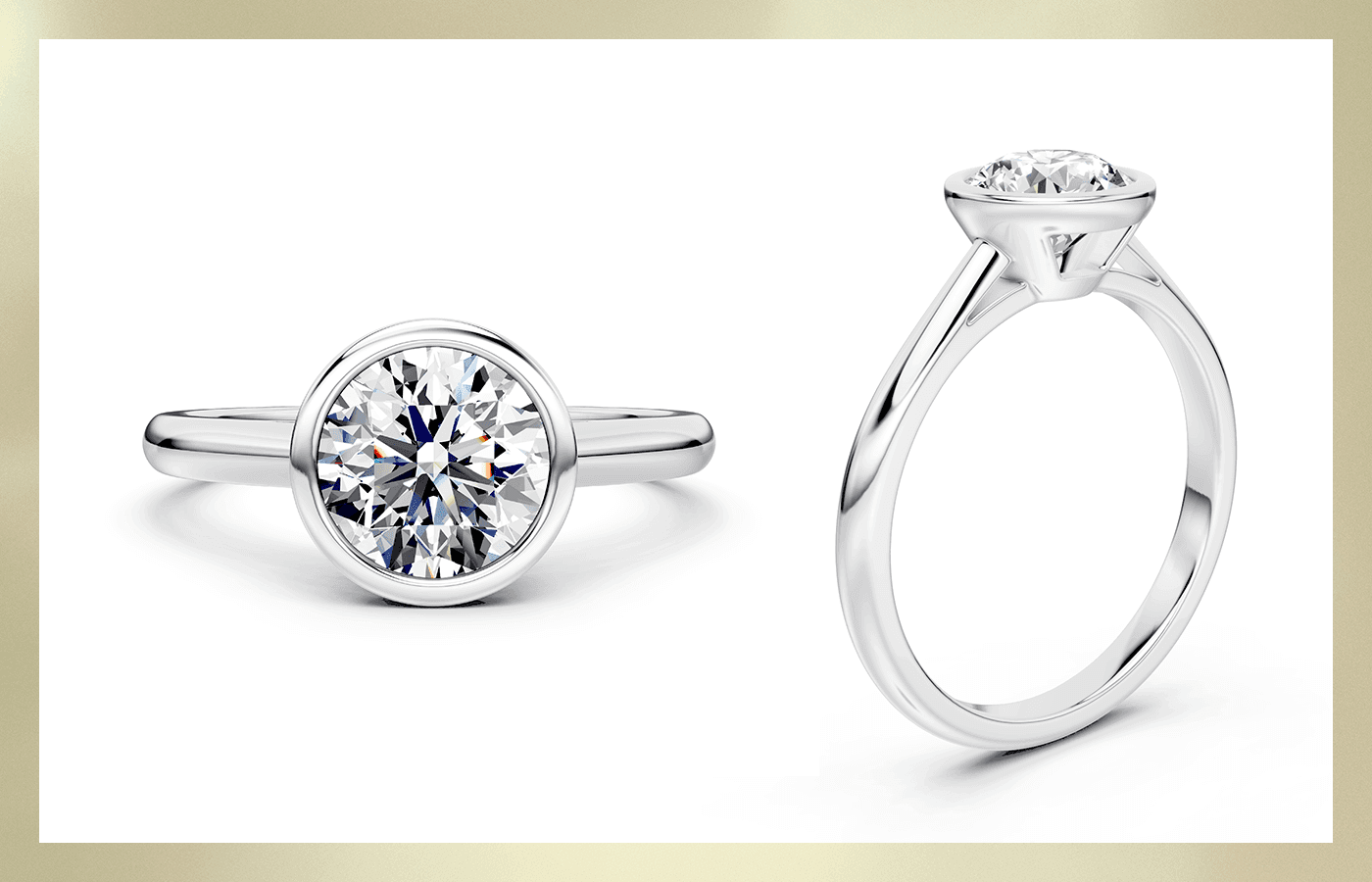
Trilogy setting: If you're looking for a particularly meaningful piece, a three-stone setting with a round diamond in the center can symbolise past, present, and future. Also known as a trinity setting.
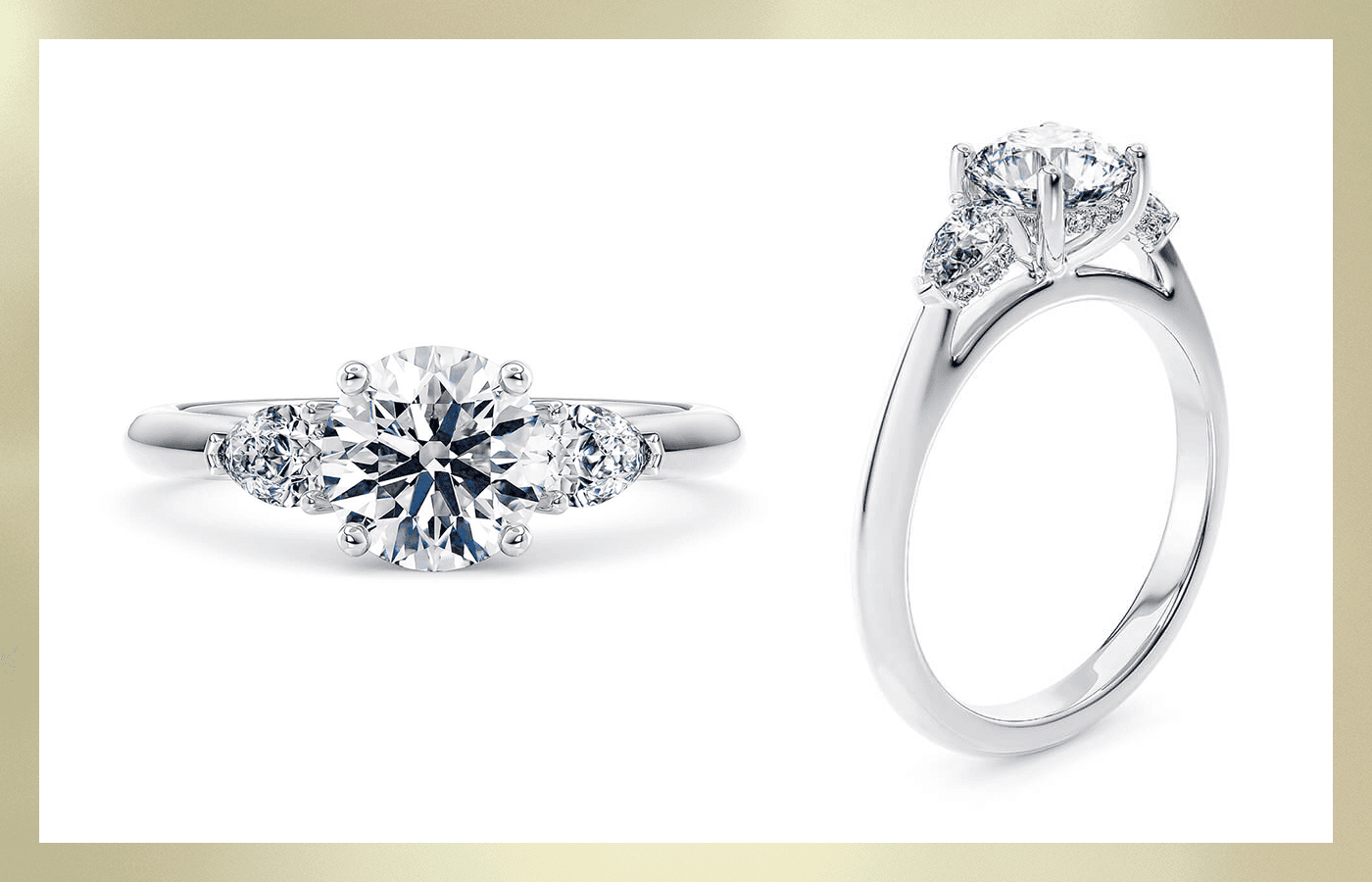
Vintage setting: Inspired by jewellery styles of the past, vintage settings are generally more ornate than contemporary designs and the perfect choice for anyone with an appreciation for timeless aesthetics.
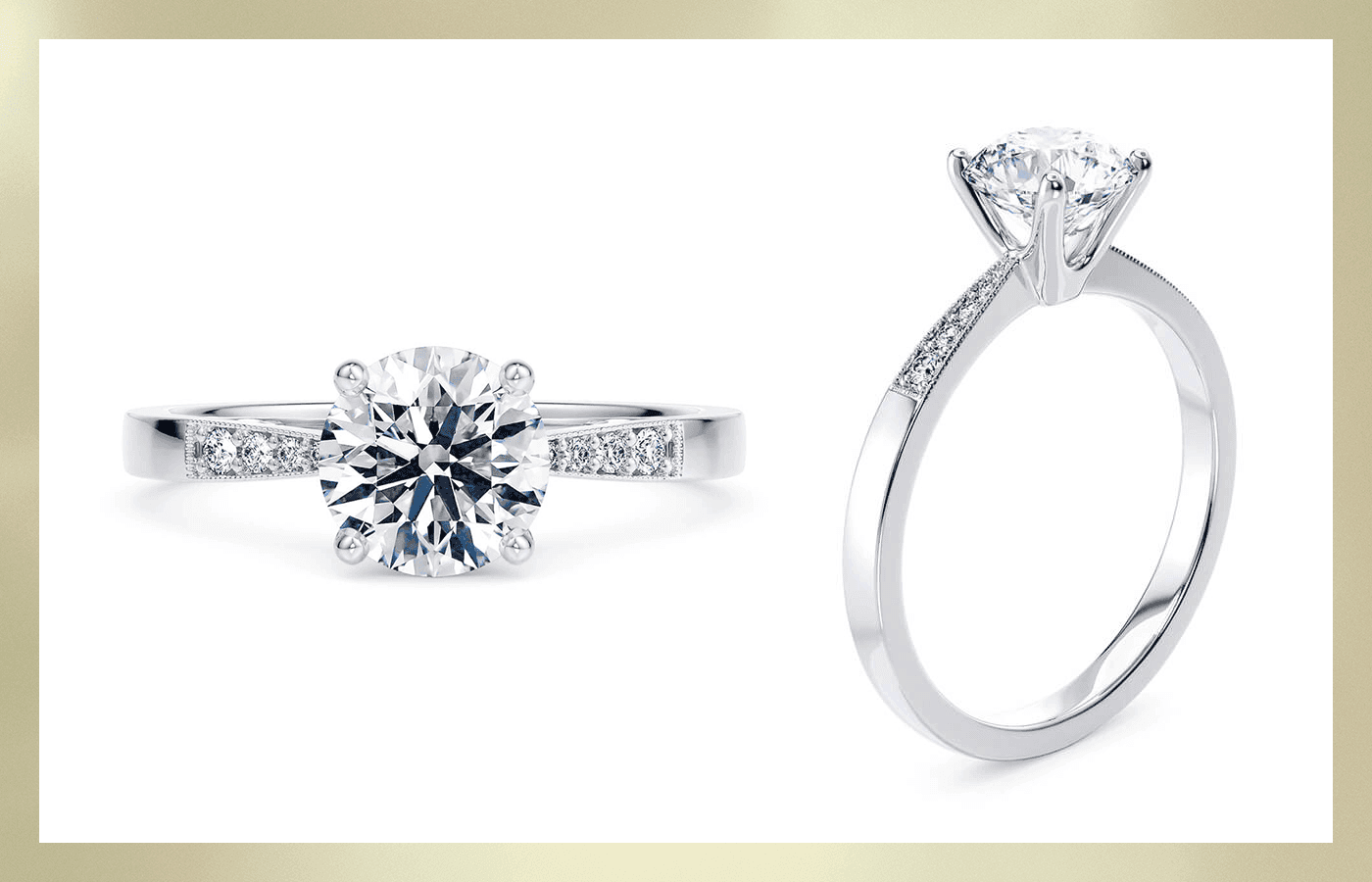
Ok, so you’ve chosen a setting style. Next, you need to consider the metal the wearer would like. Popular choices are yellow, rose and white gold, as well as platinum. Ultimately the wearer’s stylistic preference is the most important consideration, but there are other factors you may like to consider.
Metals
Platinum: Incredibly durable and if well cared for will last a lifetime. The occasional polish will help maintain shine. Platinum is also non-reactive, making it a great choice for wearers with sensitive skin.
White gold: A less dense metal than platinum, white gold is a great choice for anyone mindful of the weight of their jewellery. Its high shine will maximise the sparkle of your round diamond, but it’s worth noting that the colour will wear off after a while so a little maintenance, and some occasional relating, will be required.
Yellow gold: Timeless and classic, yellow gold is loved for its flattering hue that complements a wide range of skin tones and gemstone colours.
Rose gold: The pinkish tones in rose gold can complement cool complexions. The copper content in rose gold makes it highly durable and resistant to scratching.
Once you’ve chosen a metal, your next big decision is band style. Your band can be plain, pavé (covered in small diamonds), or even have a unique pattern or design. As with the rest of your decisions, what ultimately matters is what feels right to you, but there are still considerations to bear in mind.
Bands
Plain Bands: Simple and elegant, plain bands showcase the beauty of your round diamond without any distractions. These bands often feature a smooth, polished surface that complements the brilliance of your center stone.
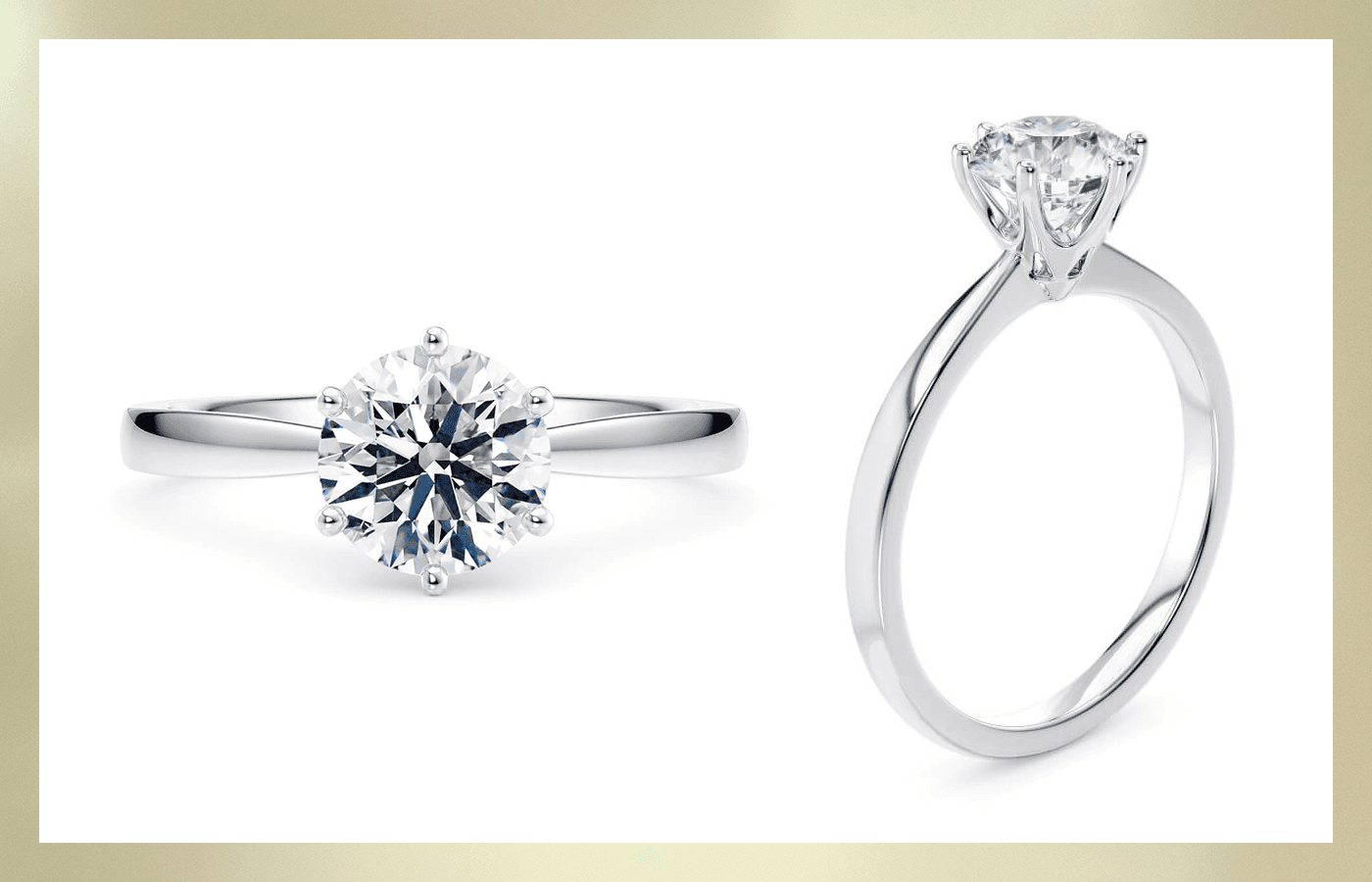
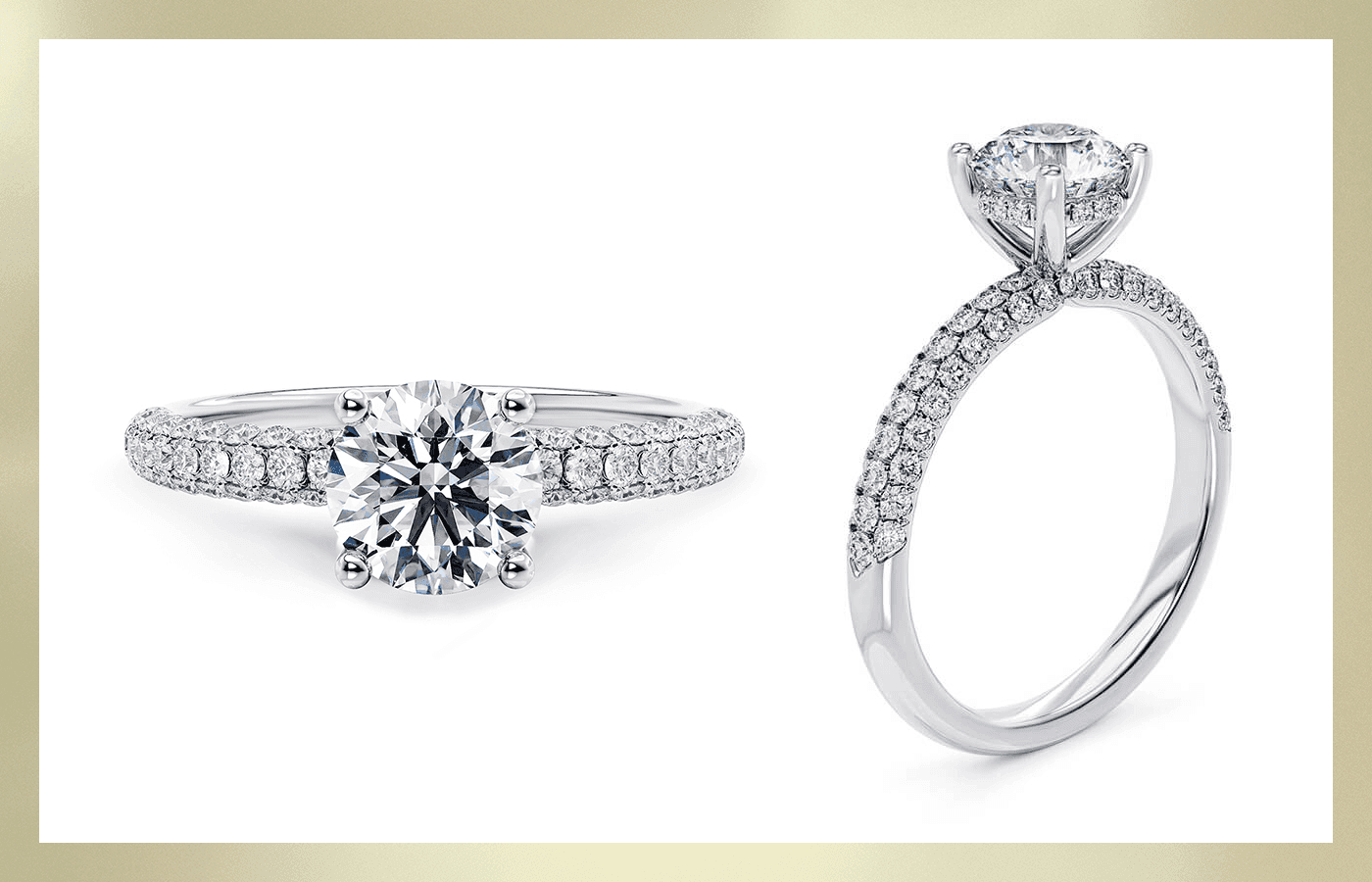
Pavé Bands: For those who love a more-is-more aesthetic, pavé bands are set with tiny diamonds which catch the light from every angle.
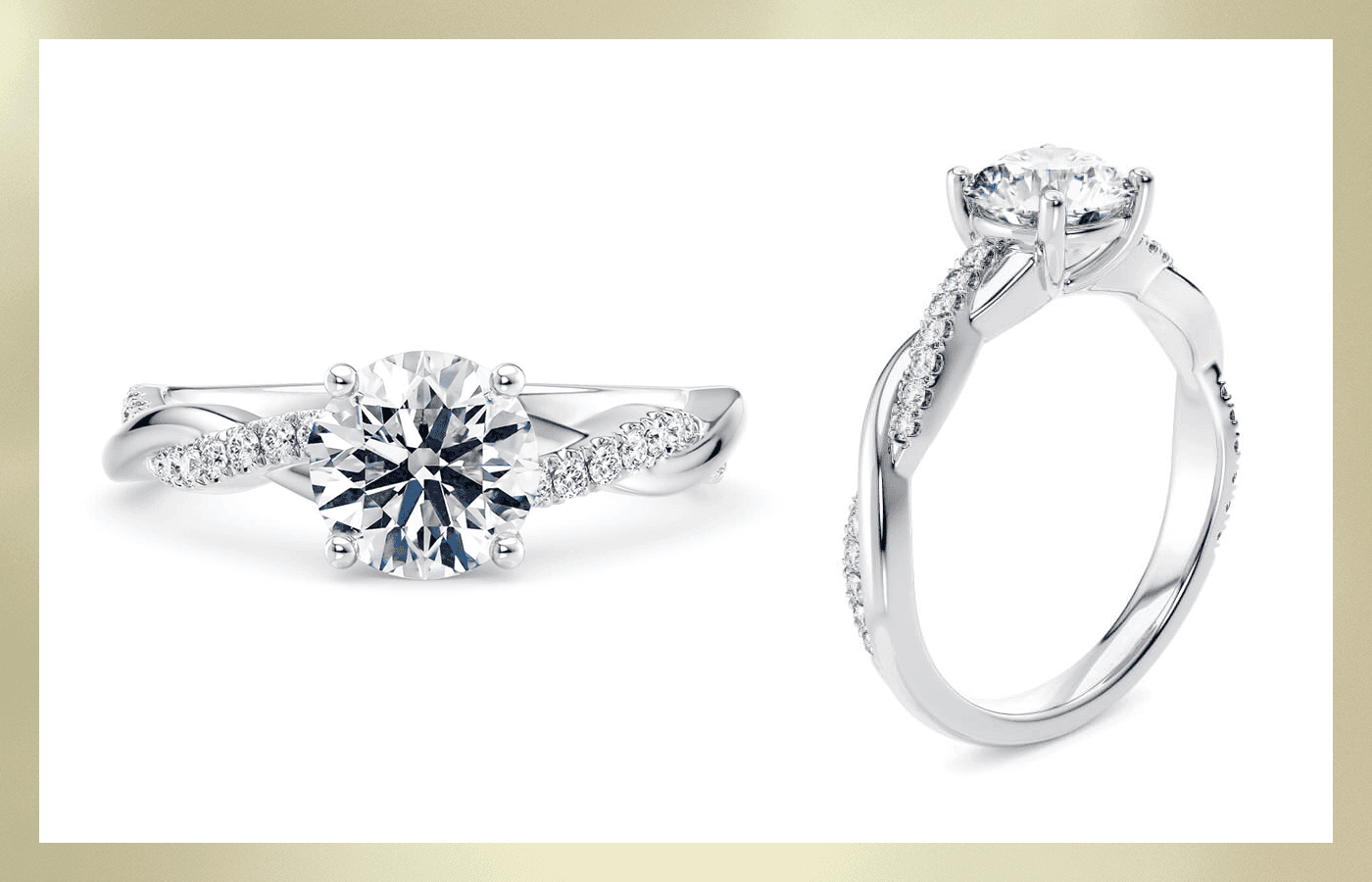
Twisted Band: If you're looking to create a unique piece, consider a more elaborate band like a twist (also known as a pirouette). This vintage-inspired design is a beautiful way to set your ring apart.
There are a lot of aesthetic choices to be made when creating a piece of diamond jewellery, but in addition to the way it’s going to look, it’s really important to consider how it will be worn. You want to feel assured you’ve created something truly special that will bring the wearer pleasure every time they put it on, so as a final note it’s well worth considering the following.
Lifestyle: The more active a person is, the more durable their diamond jewellery will need to be. If you’re creating a piece you intended to be worn daily, like an engagement ring, it’s worth opting for the most hardwearing metals and settings available. If you’re creating a piece for special occasions, you can be less practical and more elaborate with your choices.
Accessorising: To complement your round diamond choice, you might like to consider what other jewellery it will be worn with. A tennis bracelet with round diamonds is a classic choice that pairs beautifully with a round diamond ring, and a sleek watch with a band that matches your ring’s metal is an eternally sophisticated look.
As ever, these are stylistic guidelines to consider but what matters most is personal preference. Whether for an engagement ring or a significant piece of jewellery, it’s important to feel confident in your decision - and to enjoy the process! Nothing beats a showroom visit, and if you prefer to shop remotely our team of experts are just a click away.