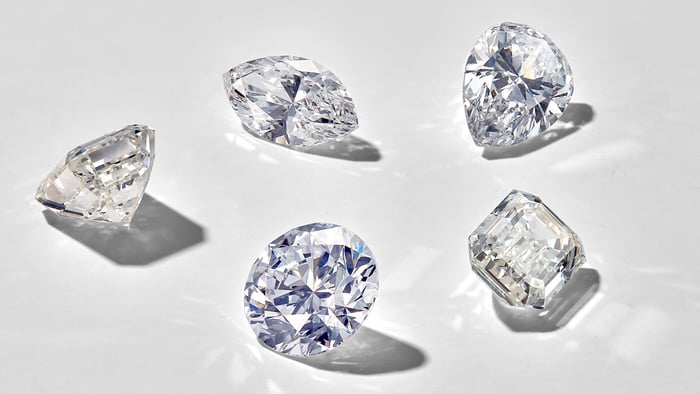

Some of the oldest, and rarest, of nature's treasures, diamonds have captivated humans for centuries. While their popularity as a jewel is well documented, there's much more to diamonds than meets the eye. Here are ten intriguing facts about these very special gemstones:
1. Older Than All Known Life Forms
These sparkling stones were formed deep within the Earth's mantle approximately 1 to 3 billion years ago, making them among the oldest substances known to humankind. Put into context, some diamonds predate the formations of Earth's continents and oceans. Complex organisms, otherwise known as plants and animals, began appearing in fossil records a mere 600 million years ago, further highlighting the almost inconceivable age of these gems.
2. Not All Diamonds are Colourless
While the classic image of a sparkling, clear stone is what comes to mind when you first think of a diamond, they can actually be found in a wide range of colours, including pink, blue, yellow, green, black. The rarest coloured, or fancy, diamonds are red – only 30 of these true red stones are known to exist.
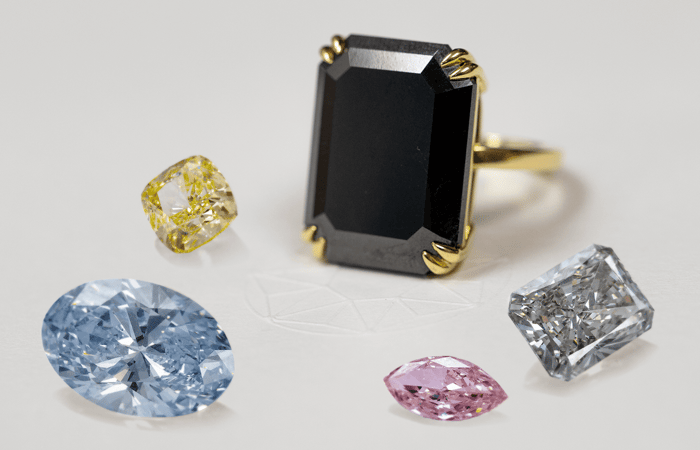
Fancy coloured diamonds — among the rarest objects in the natural world.
3. Carbon Copy
A diamond is made up of nearly 100% carbon. They form when carbon atoms bond together under high temperatures and pressure deep underground, and are made of nearly pure carbon, typically around 99.95%. The remaining 0.05% can include trace elements that affect the diamond's colour or shape.
4. The Largest Diamond Ever Found Was Over 3,000 Carats
Discovered in South Africa in 1905, the Cullinan Diamond tipped the scales at 3,106 carats. It was eventually cut into nine smaller stones, including the First Star of Africa, or Cullinan I, which is now part of the British Crown Jewels and still the largest colourless cut diamond in the world.
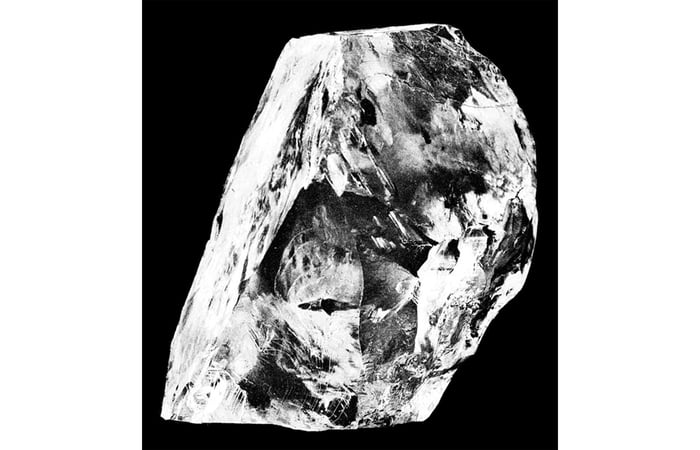 Rough Cullinan Diamond
5. They Can Come From a Lab
Laboratory-grown diamonds, also known as synthetics, possess the same chemical, optical, and physical properties as natural diamonds and to the naked eye are virtually indistinguishable from their earth-mined counterparts. There's much debate around the eco-credentials of lab-growns, but it's generally accepted they are a budget-friendly alternative to natural stones.
6. The Hardest Natural Substance on Earth
They score a perfect 10 on the Mohs Hardness Scale, making them nearly four times harder than the next hardest natural mineral, corundum, and one of the reasons they're so popular as an everyday stone. They don't conduct electricity, and heat passes through them more quickly than any other stone – meaning they're always cool to the touch.
7. They Have Unique Fluorescence Properties
Many of them give off a visible light when exposed to ultraviolet radiation, a phenomenon known as fluorescence. In some stones, this fluorescence enhances colour and appearance, while it may have a negative impact on others.
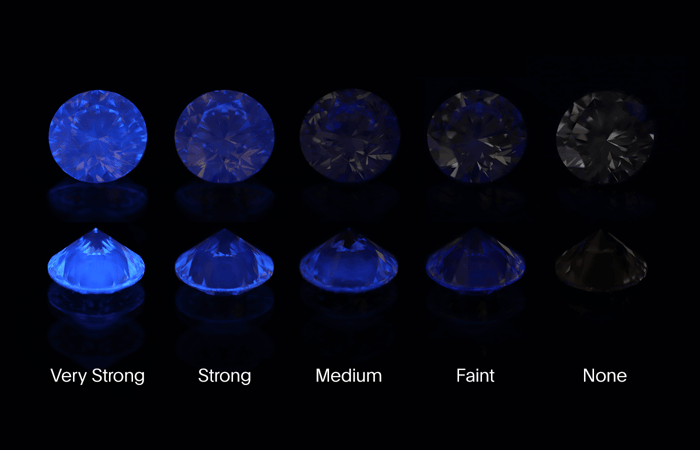
Diamonds exhibiting fluorescence under UV light — a property found in roughly a third of all stones.
8. The Power of Marketing
It wasn't until the late 19th century that a diamond became synonymous with engagement rings and romantic love, thanks in large part to an incredibly successful marketing campaign by the De Beers diamond company, 'A diamond is forever'. (It was also De Beers that popularised the notion that an engagement ring should cost two times your monthly salary - smart marketing!)

9. Diamonds in Industry
Due to their extreme hardness, these stones have long been used as cutting and drilling tools for a variety of industrial applications, such as manufacturing, construction, and mining. They're also used in aeronautical development for coating aircraft components.
10. What's in a Name
The word 'diamond' appears in records as early as 300 BC, and derives from the Greek adamas, meaning 'unconquerable, either by fire or by blows'.
10 Diamond Facts at a Glance
| # | Fact | Key detail |
|---|---|---|
| 1 | Age | Formed 1–3 billion years ago — older than Earth's continents and oceans |
| 2 | Colour | Found in pink, blue, yellow, green, black and red — only 30 true red diamonds exist |
| 3 | Composition | Nearly 100% carbon — typically 99.95% pure |
| 4 | Largest ever found | Cullinan Diamond, 3,106 carats, South Africa, 1905 |
| 5 | Lab-grown | Identical chemical, optical and physical properties to natural diamonds |
| 6 | Hardness | Scores 10/10 on the Mohs Hardness Scale — hardest natural substance on Earth |
| 7 | Fluorescence | Many diamonds glow under ultraviolet light — can enhance or reduce appearance |
| 8 | Marketing | De Beers' 'A diamond is forever' campaign created the engagement ring tradition |
| 9 | Industrial use | Used in cutting, drilling, mining tools and aeronautical components |
| 10 | Etymology | From Greek adamas — 'unconquerable, either by fire or by blows' (300 BC) |
The above snippets offer a glimpse into the complex and enigmatic world of diamonds, but truly only scratch the surface of man's fascination with the history and geology of these extraordinary gemstones.