

When precious jewels vanish, like in the Louvre museum's recent heist, it captures the world’s attention in a way few other crimes can. The disappearance of a diamond necklace or a royal tiara doesn’t simply provoke outrage over the loss of wealth, it seems to stir something deeper: a collective sense that a piece of history has been taken.
It’s no secret that jewellery is more than mere metal and stone. Above all else, it's about the story: heirlooms hold in their sparkle centuries of craftsmanship, artistry and personal (or in this case national) history. When they're gone, it feels as though that story has been abruptly cut short. Like ripping the last page of a novel we hadn't quite finished.
Louvre Burglary — What’s Next?
In what is being described as one of the most audacious robberies in our recent history, thieves dressed in high-vis vests carried out a seven-minute heist at the Louvre in broad daylight, making off with an irreplaceable collection of royal and antique jewellery. The theft, which occurred during a breezy autumnal morning, was executed with astonishing precision.
Authorities believe the perpetrators had insider knowledge of the museum’s layout and security timing. The stolen items reportedly included priceless gems from the Bourbon and Napoleonic eras, each piece steeped in the history of France’s royal and empirical lineage.
No arrests have yet been made, and an international investigation is underway, but for many, the loss already feels irreversible.
Tobias Kormind, Managing Director of 77 Diamonds, reflects:
'These heists are more than crimes, they are cultural tragedies. When rare and historic jewels vanish, the loss is not just monetary but emotional and historical. The sad reality, as proven by these historic heists, is that the jewellery stolen from the Louvre this week is unlikely to ever be recovered. Professional thieves can break down and recut large, recognisable stones and pieces to evade detection. This means that we may never see these stunning, historical pieces again. As jewellers, we feel a duty to preserve and protect the legacies behind every gem. The Louvre theft reminds us that safeguarding these treasures must be a collective priority for institutions, jewellers, and law enforcement alike.'
Famous Burglaries of History
The Louvre theft joins both a glittering yet tragic lineage of great jewellery heists of the 21st century.
Carlton Hotel Heist, Cannes (July 2013)
Estimated Value: £89 million

The most valuable jewellery theft on record unfolded in cinematic fashion at the luxury Carlton Hotel. A lone gunman walked into a diamond exhibition hosted by Leviev, one of the world’s largest dealers, and calmly filled a briefcase with jewels in under 60 seconds. Despite international manhunts and rumours linking the crime to the infamous Pink Panthers gang, the jewels have never been found.
Antwerp Diamond Heist, Belgium (February 2003)
Estimated Value: Over £80 million
Dubbed ‘the heist of the century,’ a group of criminals penetrated the high-security vaults of Antwerp’s Diamond Centre, stealing loose stones, gold, and other precious items. The mastermind, Leonardo Notarbartolo, was later arrested, but the vast majority of the loot vanished into legend.
Harry Winston Robbery, Paris (October 2008)
Estimated Value: £70 million
In a brazen operation, four armed men, some disguised as women, entered the Harry Winston boutique in Paris and stole nearly every jewel in sight, including those kept in backroom storage. Some of the pieces were later found hidden in a drain, yet most remain missing, a reminder of how easily beauty can slip through our fingers.
The One That Got Away: The Tragedy of Losing the Jewellery We Love
History is filled with lost treasures that have become almost mythological in their absence. The Amber Room, for example, was a baroque masterpiece of gilded panels and amber mosaics once housed in Russia’s Catherine Palace, which disappeared during World War II and has never been recovered. Safe to say its loss remains one of the great mysteries of art and jewellery history, cementing its fame over the years.
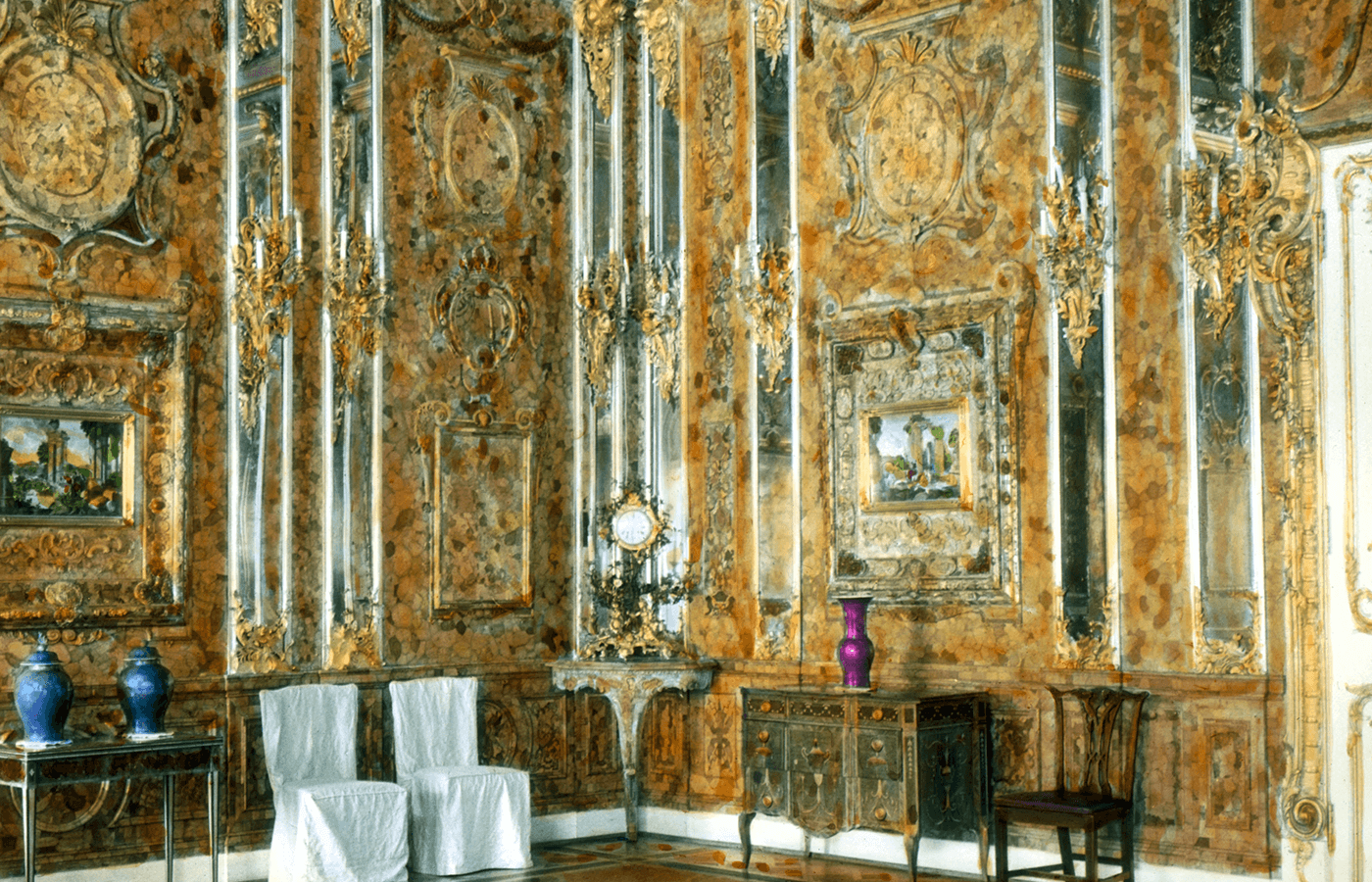
Hand-coloured photograph of the original Amber Room, 1931
These disappearances elicit a bizarre mix of sorrow, indignation and intrigue in popular discourse, and not only because of the financial worth of the pieces, but because they represent something we hold close: the human urge to create and preserve. Even on a personal level, anyone who’s lost a cherished ring or pendant knows the feeling, that mix of grief and disbelief that something so small, yet so meaningful, could simply vanish.
When entire nations experience that same loss on a grand scale, the reaction is collective: people seem unable to stop talking about the Louvre heist. It’s in these moments we’re reminded that jewellery is both a private and very public topic.
How Can You Protect Your Own Precious Items
While few of us are guarding royal heirlooms or museum pieces (unless there’s something you’re not telling us…), our personal jewellery collections feel just as valuable. Whether it’s an engagement ring, a family heirloom, or a piece bought to mark a special occasion, taking a few simple precautions can make all the difference.
1. Secure at Home
Keep high-value jewellery in a home safe that’s both fireproof and securely anchored. Avoid leaving items in easily accessible drawers or boxes. For particularly valuable pieces, consider a safety deposit box for long-term storage.
2. Insure What You Love
Jewellery insurance is essential. Ensure your policy covers loss, theft and damage, both at home and abroad. Many homeowners’ insurance plans offer limited coverage, so a specialist jewellery policy often provides more comprehensive protection.
3. Be Smart When Travelling
When on holiday, avoid wearing your most valuable items in unfamiliar or high-traffic areas. If you must bring them, store them in a hotel safe rather than leaving them unattended in your room.
4. Consider Wearing ‘Dupes’
For travel, beach holidays, or events where theft risk is higher, consider wearing replicas of your engagement ring or other statement pieces. You’ll enjoy the look and sentiment without the worry.
5. Keep Records and Regular Check-Ups
Photograph and appraise your jewellery regularly, especially after upgrades or resizing. Keep receipts, certificates, and valuation documents together. Regular professional cleanings and checks ensure that settings remain secure and stones stay protected. At 77, we recommend you send back your jewellery to us every 2 to 3 years so we can check that the structural integrity of the piece is still strong, and that no precious stone will inadvertently fall out of place.

...There’s Always a (Sparkling) Silver Lining
While the odds of recovering stolen jewels are often slim, history has offered the occasional happy ending, with pieces resurfacing decades later in unexpected places, their provenance rediscovered by chance or persistence (some stolen jewellery was even discovered in a drain in Paris!)
Above all, famous heists rekindle public appreciation for the artistry behind stolen works. Institutions, like the Louvre, are prompted to strengthen their security, jewellers to champion ethical provenance, and individuals to reassess the treasures they hold in their own lives. Even when treasures disappear, their stories endure: just beyond reach, but never entirely lost.