
When we think of engagement rings, our minds often go straight to the diamond… And who can blame us? Everything that sparkles is sure to catch the attention, but what many don’t realise is just how much the choice of metal plays into the overall appearance of a ring.
A well-chosen metal can either enhance or soften a diamond’s brilliance, conceal subtle flaws, or even completely transform the character of a gemstone. ‘The band and setting aren’t just a supporting act, they’re integral to the story engagement rings tell,’ explains Charlotte White, Head of Design at 77 Diamonds. ‘Choosing the right metal can shift the mood of a design entirely, from classic to contemporary, or from bold to understated.’
Here, we explore how different metals transform your engagement ring and how our designers help couples find the perfect match for their diamond or precious gemstone.
Want more sparkle? Choose White Gold or Platinum
If maximum brilliance is your goal, white-toned metals are by far your best friends for engagement rings. Both white gold and platinum create a crisp, clean backdrop that reflects light into your diamond, allowing it to shine with greater intensity. The bright white finish enhances a stone’s fire and brilliance, making it appear larger and more radiant.
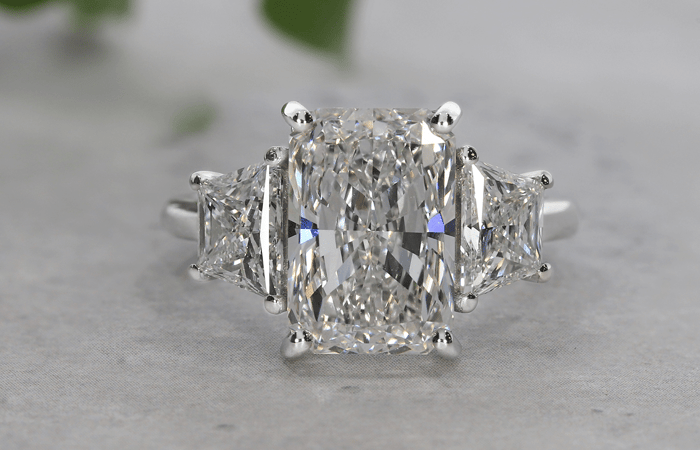 A bespoke trilogy ring set entirely in platinum
But, hang on… If they are both the same, which should you choose?
White Gold: White gold is created by alloying yellow gold with white metals such as palladium or silver, then finishing these engagement rings with a rhodium plating, a rare metal. ‘The rhodium layer will eventually wear, meaning your ring may need re-plating every few years to maintain its reflective finish. That being said, White Gold is still very resistant and comes at a lower price point than platinum, especially if you choose 9K or 14K rings,’ Charlotte explains.
Platinum: Naturally white and exceptionally durable, platinum is often regarded as a prestigious metal choice. Unlike white gold, it doesn’t require re-plating and its strength offers security for delicate claw settings. Platinum engagement rings do develop a soft patina with wear, which some adore for its antique charm, though it can always be polished back to brilliance.
Want to hide a diamond flaw? Choose Yellow Gold
Not every diamond has to be the whitest of the white. Diamonds with slight yellow tints, graded J colour and lower, can be exceptionally beautiful when paired thoughtfully with the right metal. This is where yellow gold comes into play.
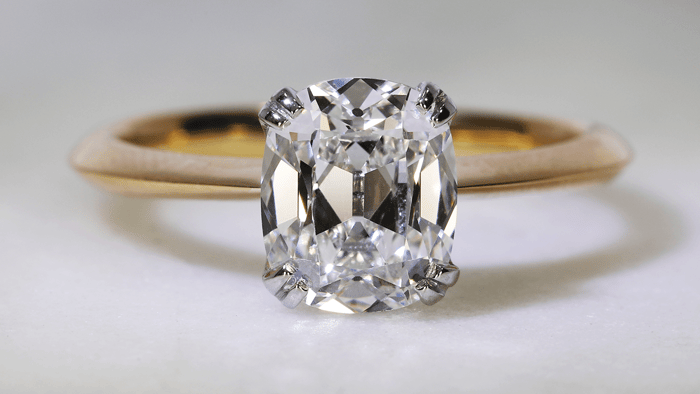
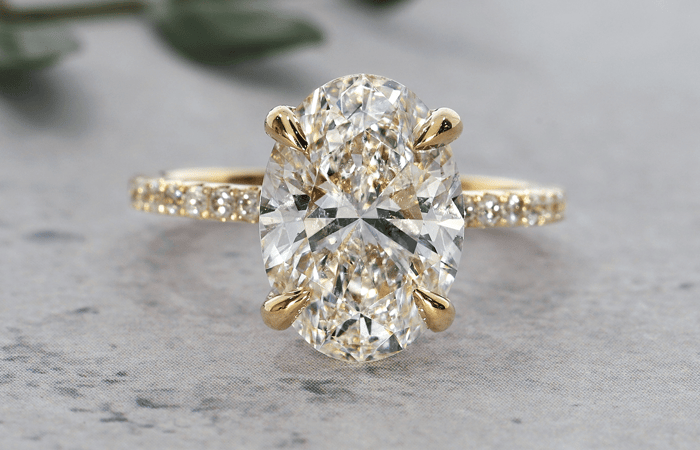 Bespoke oval ring set in 18K yellow gold
By setting a slightly tinted diamond in yellow gold, you can create the illusion of a whiter stone. The yellow backdrop blends with the diamond’s warmth, disguising subtle colour differences. ‘It’s a clever design trick,’ Charlotte notes. ‘Rather than fighting the stone’s natural qualities, yellow gold harmonises with them, allowing the diamond to appear brighter and more lively.’
There’s also a wide choice in karat:
18K Yellow Gold: With 75% pure gold, 18K offers a rich, deep tone that feels luxurious, while still being stronger than pure (and soft) 24K gold.
14K Yellow Gold: With 58.5% pure gold, this option balances durability and colour beautifully, making it ideal for everyday wear.
9K Yellow Gold: Containing 37.5% pure gold, 9k is stronger and more affordable, but the colour is paler.
Yellow gold has long been associated with tradition and romance. As Charlotte reflects: ‘For many couples, yellow gold feels timeless, it connects to the heritage of engagement rings through the centuries, yet in the right design it can still look strikingly modern.’
Want a softer look? Choose Rose Gold
There’s a reason rose gold is often described as romantic. With its blush tones, rose gold creates a gentle warmth that enhances the brilliance of white diamonds while softening the overall aesthetic. The result is a dreamy glow that is sure to make your partner blush.
Rose gold is made by alloying gold with copper, which lends it that distinctive hue. The more copper, the stronger the pink accent. Like yellow gold, it is available in different karats, with 18K offering a softer tone and 14K a deeper rose tint.
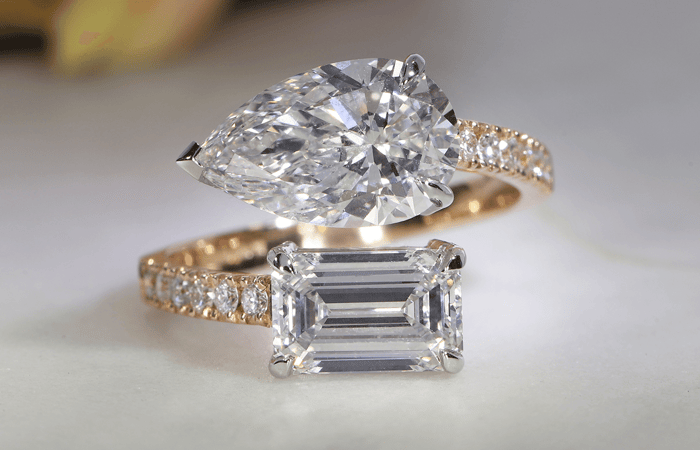 A handcrafted Toi et Moi ring set in warm 18K rose gold with platinum claws to match the crisp white diamonds
Charlotte highlights its adaptability: ‘Rose gold is wonderful if you want flexibility later on. It pairs beautifully with both yellow and white metals, so when it comes to choosing a wedding or eternity ring, you can mix and match to create a layered, contemporary look.’
Historically popular in Russia in the 19th century, rose gold has surged back into fashion in modern jewellery. Its romantic connotations make it a fitting choice for meaningful milestones, particularly for engagement rings Valentine’s Day.
Want a coloured diamond or gem? Choose your metal wisely
When it comes to coloured stones, whether a fancy yellow diamond or a luscious green emerald, the metal you choose is decisive. The right combination can either emphasise the gem’s natural tones or create striking contrast.
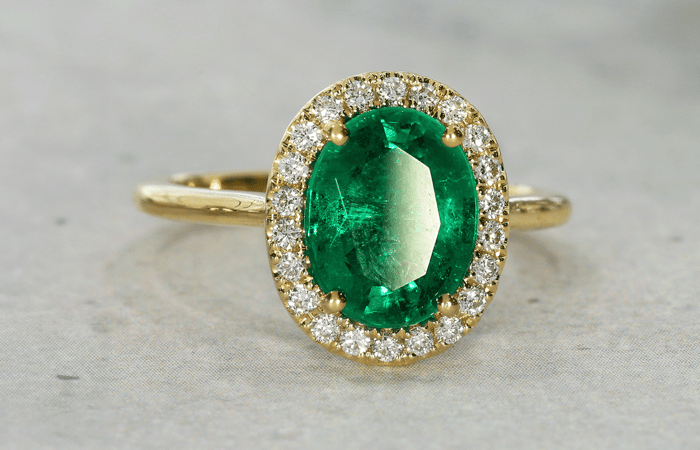 This custom-made halo ring shows a deep green emerald contrasted against crisp white diamond and an 18K yellow gold setting
Emeralds: Their lush green tones are enhanced by yellow gold, which intensifies their vibrancy.
Yellow Diamonds: These shine seamlessly in yellow gold for a harmonious look, or stand out boldly in white metals for contrast.
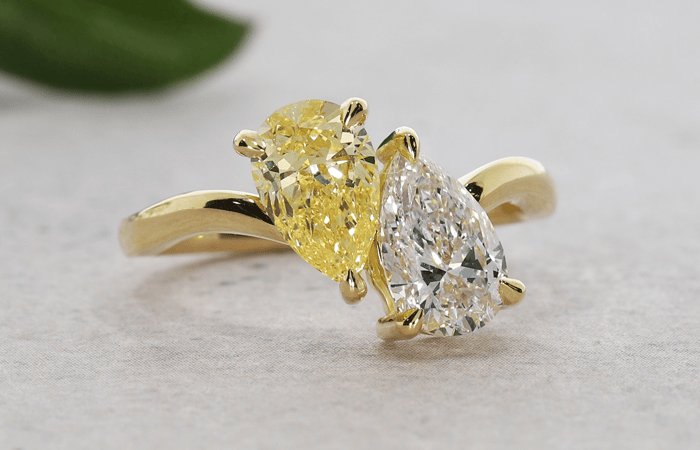 Custom-crafted Toi et Moi ring with yellow and white diamonds in 18K yellow gold
Rubies: The depth of a ruby is heightened by rose gold, whose pink undertones enrich the stone’s red hues.
Blue Sapphires: Crisp and modern in white gold or platinum, sapphires take on a regal, vintage feel when paired with yellow gold.
Think of it as colour theory. If you want a gem to appear more dramatic, choose a contrasting metal. If you want elegance and cohesion, match your metal and gemstone tones closely. — Charlotte White, Head of DesignWant the best of both worlds? Choose a dual-metal setting
Want it all and more? 77 has got you. Showing contrast, harmony, and individuality, dual-metal settings are the ultimate design choice. They allow you to enjoy the aesthetic of one metal while tailoring the setting around your centre stone in another.
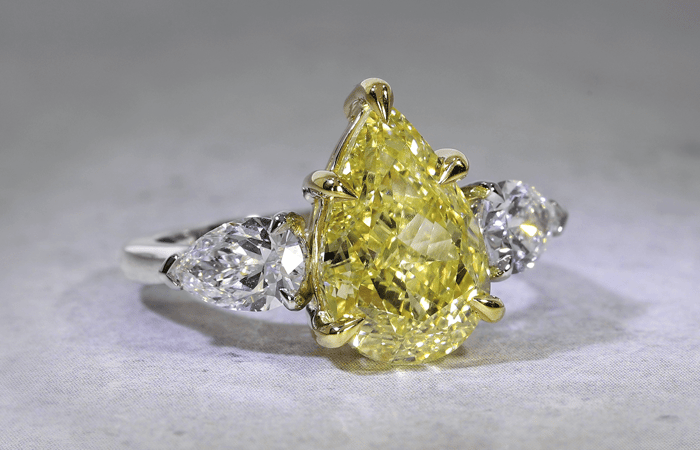
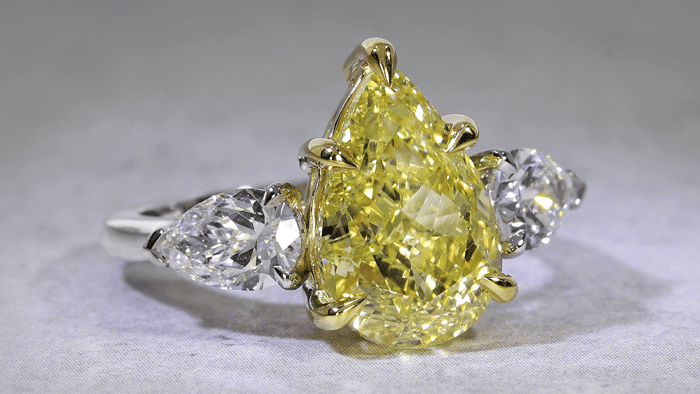
This bespoke trilogy ring features a centre yellow diamond nestled within 4 yellow gold claws to match, set on a 18K white gold band
Example 1: A platinum band feels sleek and modern, while yellow gold claws around a yellow diamond enhance its golden brilliance.
Example 2: Rose gold claws framing a ruby intensify the red, while a white gold band keeps the look versatile and flattering for fairer skin tones.
Example 3: A yellow gold band can balance warmth, while crisp white claws around your centre diamond ensure it sparkles in all its glory.
… And (of course) that’s not the end of it — the combinations of dual-metals and stones are practically infinite, so enjoy the creativity of designing your very own piece with our 77 bespoke team.
‘These mixed-metal designs are often where the artistry of fine jewellery really shines,’ says Charlotte. ‘They demand precision, but the effect is extraordinary: you end up with a piece that feels entirely your own.’