

Written by Jonas Blüdnikow, GIA Gemologist and 77 Diamonds guest contributor.
The gemstone industry has long grappled with negative perceptions regarding its environmental impact, hazardous working conditions for miners, and a lack of transparency in the journey of gemstones from source to market. Growing consumer awareness about the ethical and environmental implications of gemstone sourcing has further underscored the need for change. However, advancements in technology, such as blockchain and AI, are transforming the industry and promoting ethical sourcing practices.
Join us as we examine the fascinating evolution of gemstone sourcing, and uncover the incredible potential of technology to drive positive change in the industry.
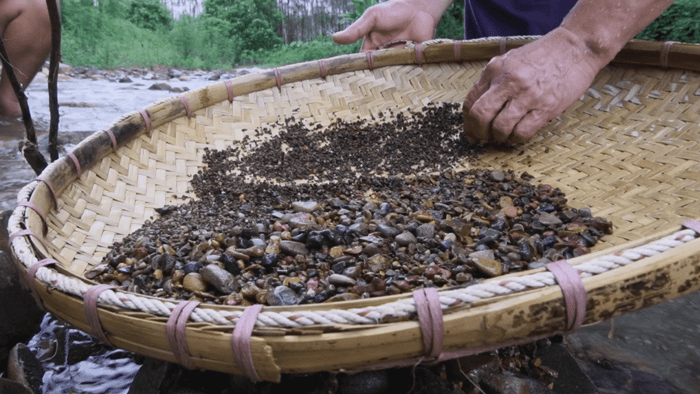
From the river — gemstone mining in alluvial plains.
The History of Gemstone Sourcing
For many decades, the gemstone industry and its mining processes have battled negative associations with environmental impact, dangerous working conditions for miners, and the often opaque journey of a gemstone’s route to market.
This lack of full transparency has been the source of concerns among consumers, who have an increasing awareness of the environmental and ethical concerns of mining and want assurances of their stone’s provenance before they commit to a purchase.
Traceability is key to transforming the industry from having a historically negative reputation into a force that will create positive environmental and ethical impact. This development is already taking place at a rapid pace, with the gemstone industry experiencing significant transformations over the years.
Most notable is the Kimberley Process (KP), established in 2003, to prevent the international trade of conflict diamonds, more commonly known as ‘blood diamonds’ after the famous Hollywood film of the same name, featuring Leonardo DiCaprio. The KP was established before the digital era had really begun, and because of this it relies on traditional paper documentation for every parcel of rough diamonds exported from a participating country. This rather old-school approach has been a simple yet efficient way to prevent conflict diamonds from entering the international market.
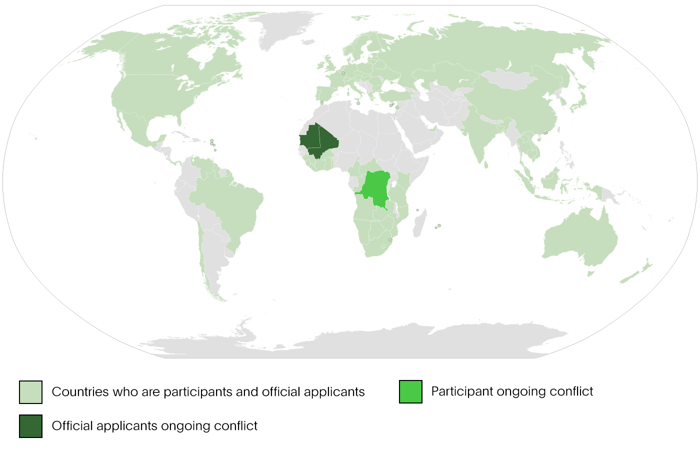
Participants of the Kimberley Process Certification Scheme (KPCS)
It’s important to note, however, that the Kimberley Process only covers diamonds currently, and not coloured gemstones. The gemstone industry is still looking for ways to improve their sourcing standards, bearing in mind every coloured gem has a varying set of attributes, including treatment methods, country of origin and sourcing processes. This makes creating an internationally accepted certification scheme more complex. As we enter this new tech era, exciting opportunities may be on the horizon.
New Technology
Today, the rise of blockchain and AI, and an increased consumer focus on sustainable mining practices have helped push the industry to ethical sourcing standards never seen before. The technological innovation the industry is experiencing today has improved traceability of gemstones entering the market, and helps consumers and jewellers confidently verify that their gemstones have been mined in accordance with the environmental and ethical standards expected.
Both Blockchain and AI (Artificial Intelligence) play a key role in this rapidly moving development. Blockchain has become a very powerful tool to enhance transparency, by documenting each gemstone’s full journey from mining to retail. Blockchain ensures documentation and disclosure, guaranteeing the ethical origin of a consumer’s purchase.
Because this technology is unbreakable, any verified information about a gemstone’s life journey will be impossible to tamper with. AI is equally contributing to the advancement of traceability. Advanced AI models can now analyse a gemstone, and based on its colour and inclusion characteristics, determine authenticity and origin.
The cutting and faceting of a ruby.
Looking Ahead
The integration of technology in gemstone sourcing is expected to keep growing over the coming years. We can anticipate more widespread use of blockchain technology to achieve full transparency, making sure that ethical practices are being upheld in the whole supply chain from mining to retail. AI will introduce more advanced tools for gemstone analysis, helping to prevent fraud with synthetic and treated stones, and also take part in the enhancement of origin tracing, by not only identifying a gemstone’s country of origin but working alongside blockchain technology to pinpoint its exact geographical source.
These incredible developments will cater to a generation of consumers who demand transparency and responsibility in the industry and in the purchases they make.